Showing posts with label language arts. Show all posts

Friday, March 3, 2017

Read Across America and March Math Madness

I love Dr. Seuss books and so do Genevieve and Tobias, so we are using the whole week to celebrate Read Across America.  The rhymes are fun.  Illustrations are friendly.  Some words are ridiculously silly.  And there are great lessons, like conservation, humanitarianism, and being willing to try something new.

On Sunday, we read The Lorax.  We decorated some ceramic planters.  Genevieve made her own, Tobias helped me make one, and we had to make one for the cat.  We started a science experiment, testing whether seeds would sprout better on top of the soil or in wet paper without dirt.

On Monday, we read Horton Hears a Who, Horton Hatches an Egg, Yertle the Turtle, and And to Think That I Saw It on Mulberry Street.  We chose these books because they all feature animals you might see at the zoo.  Genevieve made a map of the zoo and also made some charts to fill in at the zoo.  We were scientists studying animal behavior and counting animals by classification.  She kept noting the animals that had hair like her, and were therefore mammals. We also had fun marching in our own parade in honor of Mulberry Street.

On Tuesday, we were going to explore rhyming words.  Oddly enough, Mr. Dan chose to point out rhyming words in the books he read in story time.  We played with our rhyming fish.  Genevieve also enjoyed finding rhyming words to finish my sentences.  She played a game with Wonder Red from Super Why on the PBS Kids app.  We also read some of Dr. Seuss's sillier, tongue-twisting rhymes like Hop on Pop, Fox in Socks, Oh Say Can You Say, There's a Wocket in My Pocket, and One Fish Two Fish Red Fish Blue Fish.  Genevieve relived the fun of yesterday, painting a giraffe.

Wednesday is busy with two gymnastics classes, park time, and dance but we found some time for Seuss.  We read Bartholomew and the Oobleck, which is one of the few non-rhyming Seuss books.  We also celebrated the beginning of March Math Madness by reading Hoot which counts to 5 and names colors.  We made our own oobleck, using math and measurement skills.  We used cornstarch and water in a 1:1, 2:1, and 1:2 ratio.  Each had a different color.  Then we played with our non-Newtonian fluid, watching it turn from solid to liquid and back again.  Since Bartholomew helps the king with the weather, we observed the weather outside.  Then we made cloud paintings with cotton balls, and shaving cream mixed with a little glue.

Thursday, we read Green Eggs and Ham and Cat in the Hat.  We used this as a prompt to try new food so we tried some dragon fruit, which they loved, and star fruit.  We read Pumpkin Countdown, which is a rhyming book which counts down from 20.  We played with our spatial reasoning skills, playing the Three Little Pigs game and with tangrams.

Friday, we went to a rainbow sign class, where we learned color signs.  We read The Butter Battle Book and her favorite, How The Grinch Stole Christmas.  After enjoying all these different books, Genevieve created a book on her own.  She drew pictures and used stickers, and then told me what happened on each page.  It was about the weather.  She also made a bookmark.  We read The Chicken Problem.  She recently discovered Peg +Cat games on PBS Kids, and enjoys the chicken dance game.  So we had a dance party, practicing patterns and she repeated my movement patterns.


Sunday, January 1, 2017

Descriptive Words and Other Language Activities

We have been enjoying our new gifts from the holidays this week but have been missing our usual classes and time with friends.  We are getting ready for the new year with a new schedule of activities though.

Genevieve has really been enjoying these Water Wow books by Melissa and Doug.  She has been practicing her letters and numbers and playing with animals in these books.  She is really trying to figure out what letters words begin with.  She also loves counting.  The animal book is just fun for her to play with.  So far she has really enjoyed these books, and they are very reusable.  The water board she had before was similar, but tended to collect dirt which was really difficult to clean in the end.  These brush markers are great, but your toddler may press to hard and slowly scratch the pages.

Since there aren't any storytimes this holiday season, we have just spent some time playing at the library and picking out new books.  It's actually really interesting that she seems to be ignoring a lot of picture books and choosing board books and chapter books.  She also really enjoys the puppets.  Tobias wants to play with beads and peek-a-boo with the puppet tree.  Because she has been having so much fun with puppets, and got some great new ones handmade by her grandmother for her birthday, we used a leftover cardboard box from Christmas to make a puppet theatre.  She started painting it this week.

 One of ABCmouse's newer activities is a song about using more descriptive words, like drizzle instead of rain.  This inspired us to look at some other sources for descriptive words.  We read Rhymoceros and Hippopposites by Janik Coat which were filled with great descriptive words and simple illustrations to demonstrate each word like blurry and furry.  Over in the Jungle uses great verbs to describe the animals motion.  It also follows the rhyming song she loves, additional learning activities, and interesting illustrations.  The illustrator, Jeanette Canyon, uses different techniques in clay to create the images.  We followed up our books by making a texture collage and discussing the way the different items feel.

We ended the week with some puzzles.  I love puzzles, and have great memories of putting puzzles together with my dad.  Melissa and Doug make some great wooden puzzles.  Some have chunky pieces.  Others have large or small knobs for picking up pieces or even magnet poles for lifting the pieces.  But why do puzzles with your little ones?  First off, they are a great starting point for dialogue.  Sometimes it can be difficult to try to talk with your infants and toddlers.  You know the more words they hear from actual people, the better but what to talk about?  Puzzle topics are a springboard.  From shapes to colors, animals to letters and numbers, puzzles cover a range of topics.  Puzzles can help improve fine motor skills, hand-eye coordination, and spatial reasoning as they maneuver pieces into their place.  You and your toddler or infant can work together, building teamwork skills, or they can build self-confidence completing puzzles on their own.  Plus Tobias will tell you puzzle pieces make excellent noises as you crawl with them.

For more information about puzzle benefits in early childhood education:
Learning for Kids
Teach
Child Development Institute
University of Chicago


Saturday, July 30, 2016

Patterns

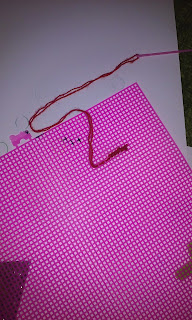
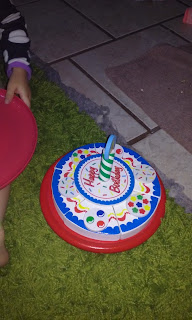
We started this week exploring simple patterns.  She "read" me a color book and a shape book to prepare.  Then we created patterns using colors, shapes, and size to make simple ab patterns.  We used her birthday cake toy to create simple abc patterns and noticed how this pattern places the same decoration opposite each other on the cake.  We read Bear Snores On, Bear Feels Sick, and Goodnight, Goodnight Construction Site and noted how these stanzas ended in rhyming patterns - abcb in the bear books and abab in the construction books.  We pulled out our rhyming fish and fished for some rhyming words as well.  She also pulled out her plastic canvas and practiced stitching, saying up and down as she pulled her needle through.
Tuesday we talked about more complex patterns.  We used our pasta to create rainbow color patterns.  We listened to Roy G. Biv by They Might be Giants and I sang my own rainbow song.  We also made patterns out of the shapes.  We also played with some stamps, noting the combination of colors on the stamps.  She tried to make her own pattern, creating a line of balloons.  We made patterns on her magnet board.  The shape magnets that came with it are great for this.  The cushion on the back is helpful for angling it well or for setting it comfortably on your lap.  The main problem is that the images are light and the erasing bar a bit difficult for her to move.  We explored texture patterns in her beads and in her foam alphabet floor tiles.


Books also have different types of patterns.  Instead of rhyme, Tuesday we looked at books that repeat larger ideas.  We read the Smallest Girl in the Smallest Grade, Two Friends: Susan B. Anthony and Frederick Douglass, and If You Take a Mouse to School.  We talked about how Two Friends had an introduction, then looked at Susan's childhood, had the quote "The right to live free.  The right to vote.  Some people had rights while others had none," then spoke of how she fought for rights.  Then it followed a similar pattern for Frederick Douglass, starting with his childhood, using the same quote and then addressing how he fought for rights.  We looked at how books like We're Going on a Bear Hunt and Let's Go Camping, which came with Violet, repeat chunks of text.  She loves We're Going on a Bear Hunt now, but it took awhile for her to get into the sound book because there is an image of a dog in a snowstorm that makes the sound of a snowstorm instead of a dog.  She used to get upset that it didn't bark.  But she likes the story and sound now, but parents be forewarned, this is a book that is great for kids but can annoy parents with its repetition.  We read I Love Saturdays y domingos, which has a pattern between sets of grandparents.  It's also nice as it includes some Spanish words.  We ended with Panda Bear, Panda Bear, What do You See and Peek-a-Boo Forest, which have sentences that repeat, with the slight change in animals in each page.
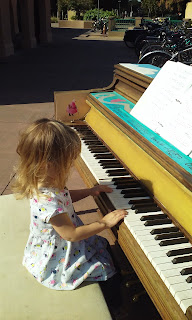
Wednesday we went back to dance class, and we realized music and dance are another place to explore patterns.  We listened to some musical patterns and tried to make our own with her various instruments.  We also practiced some movement patterns, with clapping and stomping.  We read one of my favorites, Zin Zin Zin, a Violin, which I love because it counts to ten, introduces different types of instruments, and uses some musical terminology.  We also read Do Re Mi, which was the interesting story of Guido d'Arezzo.  I didn't know a lot of this story, so it was interesting for me and written at a level children can understand.
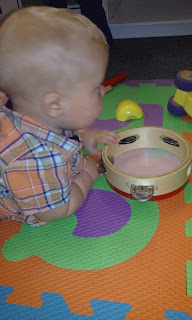
Later we colored and worked on the Animals of the Alphabet book.  We had lots of R and S animals - raccoons, rabbits, rhinos, red pandas (which have long been an animal she loves, as it was the first animal she really reacted to at the zoo), snakes, sea dragons, sloths, sea horses, sheep, sea urchins, shrimp, sharks, sea stars, skunks, squirrels, scorpions, and seals.  She thought it was amazing how many ocean creatures there were.
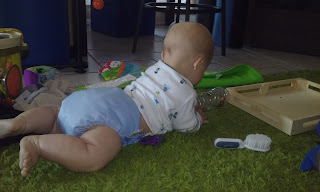


Thursday we discussed routines.  We looked at bus and train schedules at the train station, and she built a train.  We looked at her calendar and I introduced some of her new chore options on her calendar.  The felt calendar is great because we can add things as we need them, but it doesn't always stick well.  There are some great options by Melissa and Doug instead, if you don't want to make your own.  There are activity and chore charts, but we combine these in our felt chart.  And yes, Genevieve does have chores at age 2.  She feeds the cat, sweeps, helps with laundry and dishes, waters the plants, and brushes her teeth and hair.  We talked about how her chores repeat and so do the activities.  We talked about how we feed the cat every day, but other things we only do once a week, like soccer and dance class.
Tobias had sign class on Thursday too.  This week was about getting dressed.  This week and the other classes fit this theme of patterns and routines as well.  So we talked about morning and evening routines and how these repeat.  Every night we watch Daniel Tiger while we clean up, then after Daniel we put go potty, put on pajamas, brush our teeth, share goodnight kisses, and then read many bedtime stories.  Daytime and nighttime are another type of pattern we also discussed

Friday we talked about some longer patterns, like how the moon changes, the 4 seasons, and life cycles of caterpillars.  Ready, Jet, Go has interesting episodes about the moon and perspective.  The younger character Mindy believes there are a bunch of different moons, and the older kids discover that this is not the case.  It doesn't necessarily bring up the lunar cycle, but it was a good launching point.  We've been observing the sky a lot in the morning and we've seen a large moon for a couple days last week.  We also saw some hot air balloons and clouds as a side note.
We watched the episode of Curious George with Hundley Junior, the caterpillar.  We read The Hungry Caterpillar and talked about the cycle a caterpillar goes through.  We looked at pictures of Genevieve when she was younger and compared them to pictures of Tobias.  So even though we don't go through the same changes of the caterpillar, we do go through similar growth patterns and learn skills in a similar order.

While talking about similarities, we also managed to have a few different versions of the Cinderella stories in the house at the moment, so we compared Raisel's Riddle, Mufaro's Beautiful Daughters, and The Talking Eggs to the Disney version, and Rexerella.  We looked for similarities and similar story arcs, and differences.

 Genevieve has been very interested in bones this week, so we also watched an episode of Dinosaur Train with Fossil Fred and read an introduction to the skeletal system.  Wild Kratts has been introducing new episodes with Chinese animals, and Genevieve loves pandas so we also read a little about pandas and monkeys in some National Geographic books.  We were also lucky to find a female duck in our yard and a camouflaged bug in the grass.

Saturday, June 4, 2016

Memorial Day Week

Sunday, we went to church.  Genevieve made it through most of the service without problem, although she still doesn't like the nursery so she stayed in the small play room to the side of the sanctuary that the church set up for parents like me.  We rolled brother over and blew bubbles.  Genevieve sat still long enough to hear me read excerpts from Frost and Emerson read during the service.  Unlike other Sundays, we also made it through the whole service without going back and forth to the bathroom.  Last week, we made five trips.  Ah, the joys of potty training.

Monday, we did our chores like watering the garden in the morning.  Then we went for a short walk around the neighborhood.  We did this so that we could hunt for flowers and take pictures along the way.  We used these photos to create our own flowers for Memorial Day.  We painted coffee filters with liquid water colors.  Depending how you paint, this can also be a fun experiment in chromatography but we will talk about that more later.  After they dry, you fold the filters in half and roll them up.  Wrap a green pipe cleaner to hold them in place.  We used our art time to talk about Memorial Day.  We looked at our pictures of flowers and talked about how many people use red poppies to gift to veterans and use in remembrance of those lost.  We talked about how many countries celebrate a Memorial Day, but some celebrate on a different day of the year or use a different name.  We also talked about the first Memorial Day, which occurred in May right after the Civil War.  Recently freed African Americans used this day to remember the soldiers who had died for their freedom.


Later, we started our big project for the summer.  Genevieve is making her own book, an alphabet book.  We are starting by exploring animals of the alphabet.  We went to the zoo on Saturday, which was a great start.  Today we talked about the zoo and then started gluing letters and animals in the book for the letters A, B and C.  We will talk about more letters in coming weeks.  For A, we talked about armadillos, ants, anteaters, and alligators.  We had seen some anteaters at the zoo.  For B, we talked about bats, bears, badgers, bees, butterflies, birds, and bison.  We noticed that some of the animals also were colors that start with b - black bears, brown bats, and a blue footed booby.  For C, we talked about cats, cheetahs, camels, caterpillars, coral, chickens, cows and chipmunks.  We finished by doing some animal movements.  We wiggled our hips like an alligator, lumbered across the floor like a black bear and stretched our backs like a cat.

On Tuesday, we went to the local library for story time.  We heard stories about trees.  After story time is always puzzles and coloring.  We chose a really appropriate puzzle today, as the clock puzzle by Melissa and Doug has different shapes for each number.  This was appropriate as after lunch we talked about shapes.  We read Mouse Shapes and A Triangle for Adaora.  Then we pulled down the train cars I used using Thomas Pictures and tissue boxes.  We sorted some pre-cut shapes into the train cars.

Wednesday we read Go Shapes Go and 10 Times 10.  We looked at pictures by Wassily Kandinsky. With these sources of inspiration, we used the precut shapes we had sorted yesterday and shape foam stickers to create our own shape art.

Wednesday evening we had an exciting experiment.  When we were out doing our evening chores, we found an owl pellet.  Owl pellets are amazing.  The first amazing thing about an owl pellet is thinking about the owl's digestive system.  Owls swallow their food whole, then the things they cannot digest, is formed into the owl pellet, which they throw up.  So, yes, some people may find it gross but it's exciting to see what you can find inside.  Using tools like tweezers and sticks, you can slowly open up the hair and feathers that hold the pellet together.  The bones inside are interesting because you can use them to learn about the animals in your area and compare them to your own skeleton.  We found tiny hip bones and jaws in our owl pellet.  If you aren't lucky enough to have an owl near you and want to dissect an owl pellet, you can find kits that will also help you identify the bones.
 Thursday we took a break from shapes.  We went to soccer in the morning and made it though the whole session which is impressive considering the heat.  We took plenty of water breaks though.  We are getting better at only using our feet for soccer.  After soccer, we needed to plant some more seeds for our garden.  We read The Tiny Seed by Eric Carle and The Little Flower Seed, which is a Little Clifford Book.  We acted out being seeds - we curled up on the floor as seeds; the sun and rain feel on us so then our roots emerged as we stood; we spread our arms out to be the leaves and then blew in the wind so our seeds could blow away and we could start over.  After that we planted the seeds and will now watch them grow.

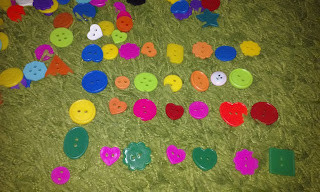
Friday we went to gymnastics.  Genevieve is getting really good at pulling her feet up to the bar and walk the balance beam.  She's also been practicing her forward rolls and loves playing tag with friends on the trampoline track.  After gymnastics, we played a little in the park although it was rather warm for that.  We went to baby bounce story time for her brother.  We also signed up for the summer reading program for pre-readers.  When brother went down for his afternoon nap, Genevieve and I read Pete the Cat and His Four Groovy Buttons.  This book is nice because it introduces subtraction.  However, we used the buttons theme from this book to practice buttoning our clothing.  We also pulled out our button collection.  We sorted by size, shape, color, and the number of holes in the button.

We ended our week with a special baby signs class.  This was designed for older siblings and their new babies.  We reviewed signs for mom, dad, sister, brother, love, play, baby and gentle.  We talked about ways for older siblings to play with the baby and ways for parents to help with the transition.  Then we walked down to the train station to hang out for a bit and watch the trains go by.


Thursday, December 17, 2015

Learning through Play: The Talking Eggs

The Talking Eggs is a book by Robert D. San Souci and illustrated by Jerry Pinkney.  It is a Creole take on the Cinderella story and offers many jumping points for fun, tie-in activities both literary and otherwise.  You can use this story to begin an exploration of Creole culture or compare this to other Cinderella stories from around the world.  Use language skills to recognize similes in the story and create some of your own.  Learn about estimation, hypotheses, and the science of sound while playing with eggs or create some beautiful artwork.

Most of these activities can be done at any age, with adult guidance.

The Projects

Materials needed for the project include a copy of The Talking Eggs, copies of other types of Cinderella stories, hard-boiled eggs or emptied egg shells, markers or paints/egg dyes, hard-boiled egg, regular egg, bowl of vinegar, bowl of water, and plastic eggs filled with things like coins, rice, beans, buttons, cotton balls, paper, etc.

Begin by reading the story.  Talk about how it compares with the Cinderella story most familiar to the kids, which is probably the Disney version.  What is similar in these stories?  What is different?  Most Cinderella stories include an evil stepmother and stepsisters, a dead mother, a dead father or a father who is poor at his job, a protagonist forced to do most of the work around the house to care for the family and a mutual attraction with a person of high status.  Not all of these need to be met to be classified as a Cinderella story.  Even Harry Potter has elements of this idea, with dead parents and a boy forced to live in a sad, tiny room with very little of his own while his cousin is spoiled.  Explore some other Cinderella stories from around the world and look for common elements.  Explore cultural differences.  What do you think the lesson is in these stories?  Some good places to start are:
Glass Slipper, Gold Sandal by Paul Fleischman
Note to parents: Read through the stories you find before you share them with your children.  In some stories Cinderella runs away because her father is inappropriate with her and in other stories the “prince” physically or emotionally abuses “Cinderella” when she is dressed in rags and acting as a serving girl.  The stories from the sites above do not include these interpretations, but other searches may bring those stories up.

The Talking Eggs uses some excellent examples of similes and metaphors.  Use the information below to talk about what these are and hunt for some in the book.
 
The Talking Eggs is a Creole version of a Cinderella story.  Learn a little bit about the Creole culture.  Can you see any examples of this in the story?

Although most eggs don’t talk, some can make them make noise.  Fill some plastic eggs with various things.  Some of them should make noise like beans and buttons, some should be quieter like cotton balls and paper.  See if your children can identify what’s inside the eggs and if there is a lot of the item or a little.  If they are interested, you can demonstrate how the sound travels through the air by dropping items into a bowl of water.  Sound travels in waves, just like those you created in the bowl.

What else can we learn from eggs?  Well, how can you tell the difference between a hard-boiled egg and an uncooked egg?  Look at one of each to see what you can learn.  Feel them.  Can you guess which is which?  Try spinning them, then touch them to make them stop.  The hard-boiled egg should stop easily, but the uncooked egg will want to keep moving as the liquid sloshes inside.  Other fun egg experiments include trying to break the egg with two fingers, starting from the top to bottom and then trying from the sides.  How difficult is it to break the egg without hitting it?  How difficult is it squeezing in different locations?  Or try soaking the eggs in vinegar and watch as the acidic vinegar eats away at the calcium carbonate in the shell.  If you leave the eggs for about two days, until the shell is entirely gone, the egg will bounce a bit, but remember not to bounce it too hard as it still is an egg.

Lastly, many people paint eggs for Easter, but that is not the only reason to have beautiful eggs like the ones in the story.  You can use cleaned out egg shells if you want to keep your eggs for longer or hard-boiled eggs for short term.  To clean out an egg shell, use a needle to make a hole in each end of the egg.  Use the needle to try to break up some of the yolk and whites in the egg. Carefully blow through the hole at the other end.  Go back and forth between breaking up the egg’s insides and blowing until you think most of the liquid is gone.  Carefully run some water through the egg and gently shake this out.  Then allow the egg to dry.  Try not to get any of the raw egg in your mouth for safety.  Once the eggs are dry, you can use the same dyes you would for Easter eggs, can color them with markers or paint them.  Or you can use natural dyes like flowers, onion skins, coffee grounds, etc.

Some Information to Share
 Similes and metaphors
Similes and metaphors are both similar ways to provide imagery to your sentences.  They paint a different picture than simply saying that the basket is red.  The sentence “The basket is red as an apple” gives the reader a vivid image.  This example sentence is a simile, which is a comparison using LIKE or AS.  Metaphors also compare two things, but does so more directly by skipping the words LIKE or AS.  “The desk is a soldier standing tall” is an example.

 Creole culture
Creole is the term for descendants of the French, Spanish, or Portuguese settlers living in Louisiana, the West Indies and Latin America.  The color of one’s skin didn’t matter.  French customs tended to prevail, especially as the English settlers began to move into the area.  The French Opera House and dances like cotillions were popular, as the Creoles loved music.  The French language played a large part, although it often blended with English as others moved in.  Many Creoles considered themselves Roman Catholic.  One of the biggest distinguishing features of Creole homes is Creole cooking.  A Creole meal is a celebration, and features a combination of European, Native American, and African influences.  Sweet potatoes, okra, and file often play a role in their dishes.  They enjoy teas, lemonade, coffees and desserts like tea cakes, galets, and pralines.  The most famous Creole dishes however are typically thought to be gumbos, dirty rice, and jambalayas.

Scientific Method
The scientific method is a problem solving technique, a way to answer questions, a method to study the world, and a test of whether a statement is true.  Although the steps may change in order from person to person and from situation to situation, the steps usually stay the same.  You should begin by asking questions, making observations, and doing research.  Observing the world around you will help you come up with questions like “Why do cats and dogs have fur?” or “Which ball will hit the ground first?”  You can do research to see what other people have to say and study other situations, like studying other animals that have hair or other items dropping.  Secondly, use your observations and research to create a hypothesis, an idea you are able to test.  It should answer your original question, but might not be the right answer.  That’s why you are going to put it to the test.  The test is the next step, called an experiment.  You’re not done making observations though.  Make observations and record what happens in your experiment.  This work should help you remember what happens and allow future scientists to compare your work and theirs.  Use the observations to come to a conclusion.  Was your hypothesis correct?  Why or why not?  What new questions do these conclusions lead to?  Finally, share your work so that others can explore what you’ve learned.

 Sound Waves
Have you ever thrown a stone into water and watched as the waves spread out?  Or played with a Slinky, watching as the coils grow closer and further apart?  This is like sound.  For example, imagine someone knocking on a door.  If we could look really close, we could see the molecules in the door vibrate.  They knock into their neighbors which begin to vibrate.  The vibration of the door causes the air molecules to vibrate.  Eventually those vibrations will reach your ear and your brain can convert the vibrations into sound.  All these different types of matter affect the speed of the sound wave, or vibration.  Since solid molecules are closer together, the sound moves faster.  Also since sound requires matter, there isn’t sound in space because of the lack of molecules to vibrate.

 Eggs
Most of the time when we think of eggs, we think of chicken eggs but many animals lay eggs from dinosaurs to birds, from reptiles to fish and even the duck-billed platypus.  Most eggs have some sort of covering that allows air and water to pass through but helps protect the growing animal.  Chicken eggs have a shell made of calcium carbonate, which is the same thing coral skeletons and antacids are made from.  The egg white is mostly albumen, and if there were a baby chicken inside, this would be the food it could eat while it’s growing.  The albumen has all sorts of vitamins and minerals in it that are good for you or the baby chick.  The yolk is where the baby chicken would grow from.  There is also usually an air pocket at the large end.  White and brown are not the only color of egg, although they are the ones we are most familiar with.  Hens are known to lay eggs in pink, green and blue too.  The egg can tell you how fresh it is.  Old eggs float in boiling water while fresh eggs hang at the bottom.  Or you can look at the egg white to tell how fresh it is.  If the egg white is clear, the egg is very fresh while cloudy egg whites mean the egg is starting to age.  If your egg white is pink or iridescent, don’t eat that egg.  It has gone bad.

 Faberge eggs
Faberge eggs are elaborate Easter eggs created by the Russian goldsmith Faberge.  The most well-known and valuable tend to be the ones created for the Russian Imperial family.  These eggs were made almost yearly between 1885 and 1916.  There were a few years when Russia was at war that it was difficult to create the eggs.  The tradition began when Tsar Alexander III decided he wanted to give his wife an extra special Easter present.  His wife had enjoyed an egg owned by her aunt, so the Tsar turned to Faberge to create a special egg for the Empress.  The first egg is known as the Hen Egg, and opened to reveal a golden yolk which in turn opened to reveal a small gold hen.  The hen also opened and inside was a diamond replica of the Imperial Crown.  She was so impressed, Alexander III decided to commission Faberge to create a new egg each year.  He left Faberge to design the details, but required that there be a surprise in each egg.  The eggs were very intricate and often took more than a year to create.  Faberge often looked to important events in Russian history and the family life for inspiration.  The most expensive is the Winter Egg of 1913 and has diamond snowflakes.  After Alexander III died, his son took up the tradition, continuing to have an egg created for his mom and his wife.  The Russian Revolution brought an end to the tradition.  Of the fifty Imperial Faberge eggs, 42 have survived.  Recently, another egg appeared at a flea market and was purchased by a scrap dealer who did not recognize it, but thought the gold and gems might be worth something.  He eventually turned to the internet and discovered the purchase to be worth $33 million.


Bibiliography
The Talking Eggs by Robert D. San Souci
Fairy Tales by Jeanne King
Glass Slipper, Gold Sandal by Paul Fleischman
http://www.telegraph.co.uk/culture/art/11434818/Faberge-eggs-all-you-need-to-know.html